Advent - the blessings and the struggle
- marie64484
- Dec 6
- 4 min read
The Struggle is Real:
Why Catholic School Leadership is Different
You wake up at 5:30 AM to pray before the day begins. By 7:00, you're managing a parent crisis. By 9:00, you're observing classrooms. By 10:30, you're on a call with the diocese about enrollment projections. By noon, you're covering a sick teacher's lunch duty. By 2:00, you're meeting with the finance committee about the budget shortfall. By 4:00, you're planning the Advent liturgy. By 6:00, you're at the school board meeting. By 9:00, you collapse into bed.
And tomorrow, you'll do it again.
Your job has enormous scope and you are doing an amazing job of balancing it all.
The Five Jobs You Actually Have
Catholic school principals aren't just instructional leaders. You're simultaneously:
CEO - Managing operations, enrollment, marketing, facilities
CFO - Balancing budgets, fundraising, long-term financial planning
Spiritual Leader - Nurturing Catholic identity, leading liturgies, forming faculty
Instructional Leader - Curriculum, assessment, teacher development, student outcomes
Human Resources Manager - Hiring, evaluating, navigating personnel issues, building culture
Crisis Manager - The daily fires that don't appear in any job description
No graduate program prepared you for this. No principalship academy fully covered what to do when the pastor disagrees with your discipline policy, the diocese mandates a new curriculum you can't afford, and a board member questions your enrollment strategy—all in the same week.
And somewhere in all of this, you're trying to support your teachers, who are themselves carrying an enormous load and looking to you for leadership, stability, and care.
Multiple Bosses, Contradicting Mandates
Here's what makes Catholic school leadership uniquely challenging: you answer to everyone and no one all at once. The pastor wants one thing. The diocese wants another. The board has a third vision. Parents expect a fourth. And somewhere in all of this, you're trying to make decisions that serve the mission and the children. You don't have the autonomy of a private school head. You don't have the system support of a public school principal. You're navigating a governance structure that's often unclear, under-resourced, and built on relationships that can shift with a single pastoral change.
You weren't prepared for this because no one talks about this part.
The isolation is real. The complexity is real. The weight of carrying a mission-critical institution with inadequate preparation and resources—that's real too. Theodore Roosevelt once said: "It is not the critic who counts; not the man who points out how the strong man stumbles, or where the doer of deeds could have done them better. The credit belongs to the man who is actually in the arena."
You are in the arena.
You stay because you believe Catholic education matters. You stay because you see what happens when children experience faith integrated with learning. You stay because, despite everything, you can't imagine doing anything else. This is your arena. And staying in it—even when critics come, even when the scope feels impossible, even when you're exhausted—is an act of courage and fulfills you.
The Ignatian concept of "indifference" doesn't mean not caring. It means holding your role with open hands, doing your absolute best while trusting that outcomes belong to God. It means embracing the scope of your work without letting it crush you. It means knowing you can't do it all perfectly—and showing up anyway.
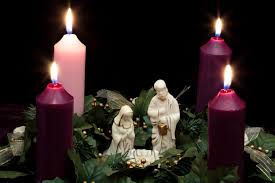
Advent is a season of preparation in darkness before light arrives. If you're in a dark season of leadership right now, know this: the struggle you're experiencing isn't a sign you're failing. It's a sign you're doing something that matters. But preparation doesn't mean doing more. It means creating space for what matters most. Here are three boundary-setting practices for this Advent season:
1. Protect one non-negotiable each week. Maybe it's your morning prayer time. Maybe it's leaving by 5:00 PM on Wednesdays. Maybe it's not checking email after 8:00 PM. Choose one boundary and hold it sacred, even when (especially when) everything feels urgent.
2. Name what's "good enough" this season. The Christmas pageant doesn't have to be Broadway-quality. The faculty gift doesn't have to be elaborate. The Advent prayer service can be simple and still be beautiful. Give yourself permission to do some things at 80% so you can show up at 100% for what truly matters—like being present to a teacher who needs you or actually enjoying the children's joy during this season.
3. Practice the Examen with your leadership, not just your soul. Each evening, ask yourself: Where did I see God in my work today? Where did I feel most alive as a leader? Where did I lose myself in busyness rather than purpose? Let the answers guide tomorrow's choices.
This isn't about self-care as indulgence. It's about sustainability as stewardship. You can't pour from an empty cup, and your teachers and students need you to stay in the arena for the long haul.
The Light is Coming
Tomorrow, you'll wake up at 5:30 AM again. There will be crises and emails and meetings and a hundred small decisions that somehow feel enormous. You'll navigate contradicting expectations and support exhausted teachers and wonder if you're doing enough.
You are enough. Your presence in the arena matters. And the light you're preparing for—in this Advent season and in your leadership—is already on its way.
You don't have to do this alone.
If you want to share your "arena story"—the moment you chose to stay despite everything—I'd love to hear it in the comments below. Your story might be exactly what another principal needs to read today.
In the meantime I hope you will join our mailing list by adding your email below
And, until then, may the road rise to meet you, may the wind be always at your back, may the sun shine warm upon your face and may God hold you in the palm of his hand.
Dr. Marie Bordeleau


Comments